magmatic / sediment-hosted / laterite
Cobalt prospectivityacross Australia, the USA, Canada & worldwide.
Magmatic sulphide, sediment-hosted and lateritic cobalt, ranked and explained across Australia, the United States and Canada.
-
 ✓
✓ Australia
Ranked targets
-
 ✓
✓ United States
Ranked targets
-
 ✓
✓ Canada
Ranked targets
- ✓
Everywhere else
Global model
Ranked targets come with national models in Australia, the United States and Canada. Everywhere else, the global model returns the prospectivity map, the geology behind it and a confidence read. Next, the models are retrained on the full record and new sources, such as hyperspectral imagery, before we use them to rank and select ground.
How we rank cobalt ground
From a country to a decision.
- 01 · Atlas
Know the ground
The geology, structure, recorded deposits, tenure and geochemistry over the ground, on one map with the source of every layer.
See Atlas - 02 · Open Ground
Find ground you can peg
Which ground is open, held or excluded, read from each licensing authority's own register.
See Open Ground - 03 · Prospectivity
Rank it for cobalt
The ground scored for cobalt, with the evidence behind it and ranked targets in Australia, the United States and Canada. Anywhere else, the global model maps cobalt.
See Prospectivity - 04 · Spectral
Map the alteration
The alteration minerals and the structures that control them, from satellite: regional to district scale, and camp scale from WorldView-3.
See Spectral - 05 · Due Diligence
Check before committing
Tenure, land access, environment and the real cost to hold and test a cobalt position.
See Due Diligence -
Talk to us about cobalt
Partners, investors, publishers and researchers.
The deposit system
The cobalt system.
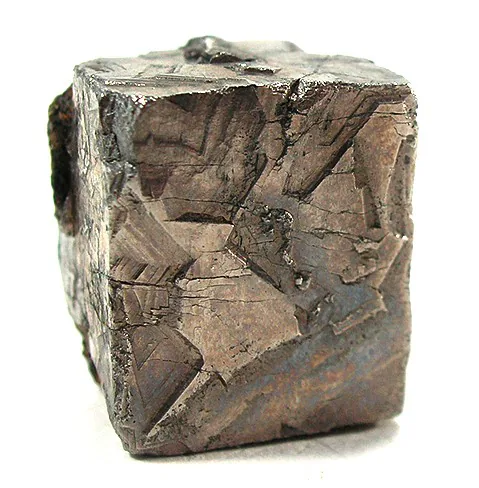
Cobalt is a lustrous, ferromagnetic transition metal prized for the strength, heat resistance and magnetic performance it confers on alloys, and for its role in rechargeable-battery chemistry. It is rarely found as a native metal and is won almost entirely as a by-product of copper and nickel mining.
Read more: the deposit model, why it matters and where it is used +
More on cobalt
Its ore minerals span sulphides and sulpharsenides such as cobaltite, linnaeite and carrollite, the arsenide skutterudite, cobalt-bearing pentlandite in magmatic ores, and secondary oxides such as heterogenite in weathered ground. MineDSS models cobalt through three deposit systems: magmatic sulphide, sediment-hosted and lateritic. Each leaves a mappable footprint: distinctive host lithologies, alteration or weathering, geophysical responses and a co-located multi-element geochemical halo. That is exactly the pattern a prospectivity model is built to read across large, partly covered terrains.
The deposit model
The three systems span the full cobalt cycle from magma to weathered regolith. Magmatic sulphide deposits form where an immiscible sulphide liquid segregates from cooling mafic and ultramafic magma; cobalt substitutes into pentlandite alongside nickel, copper and platinum-group elements. Sediment-hosted systems concentrate cobalt as carrollite and cobaltite within reduced, organic-rich or metasedimentary strata, typically in copper-bearing basins where reduced fluids fix metals along redox and structural traps. Lateritic deposits are secondary: prolonged tropical weathering of ultramafic rock strips soluble elements and concentrates nickel and cobalt in the limonite and manganese-oxide (asbolane–heterogenite) horizons of the weathering profile.
Why it matters
Cobalt sits near the top of the critical- and strategic-mineral lists maintained across the United States, the European Union, the United Kingdom and other major economies, because its most important uses touch both the energy transition and national security. It is central to the cathodes of high-density rechargeable batteries and to the superalloys that make high-performance jet engines possible, so demand is reinforced by electrification, aerospace and defence programmes at once. Both mine supply and refining are heavily concentrated in a small number of countries, and the journey from discovery to producing mine is long, so transparent, defensible targeting of prospective ground carries real weight for explorers and for the governments that seek secure, diversified supply.
Where it's used
The fastest-growing use of cobalt is in the cathodes of lithium-ion batteries, where it stabilises structure and raises energy density in cells for electric vehicles, consumer electronics and grid storage. Its oldest strategic use is in superalloys (cobalt-based and nickel-based) for the turbine blades of jet engines and industrial gas turbines, where strength at high temperature is essential. Cobalt also underpins high-performance permanent magnets, catalysts for petroleum refining and synthetic-fuel synthesis, hard-facing and wear-resistant alloys, cutting-tool binders, and durable blue pigments. These applications make secure, well-characterised supply a matter of both industrial and national interest.
Questions
Cobalt: common questions.
Which cobalt deposit types does MineDSS model? +
MineDSS models three deposit systems: magmatic sulphide, sediment-hosted and lateritic cobalt. Magmatic systems host cobalt in pentlandite where a sulphide liquid separates from mafic-ultramafic magma, alongside nickel, copper and platinum-group metals. Sediment-hosted systems fix cobalt as carrollite and cobaltite in reduced, copper-bearing sedimentary and metasedimentary basins. Lateritic systems concentrate nickel and cobalt in the weathered profile above ultramafic rock. Because cobalt is almost always won as a by-product of copper and nickel, these three routes capture the great majority of primary and secondary cobalt sources, and the model ranks ground by how closely its evidence matches ground where samples assay anomalously high for the target mineral.
How is the model tested, and where can I run cobalt? +
Every MineDSS model is tested before it is served: we withhold whole blocks of ground, rebuild the model without them, and check that it still ranks the anomalous samples there above background, with test ground kept spatially separate. A model that does not pass our release gates is not used, for any mineral, in any country. National models for cobalt run in Australia, the United States and Canada, with ranked targets. Anywhere else in the world, the global model returns the prospectivity map, the geology behind it and a confidence read. Skill is model-level, never a specific site's measured accuracy, and never a discovery or JORC / NI 43-101 resource claim.
Which pathfinder elements track cobalt? +
The classic pathfinders are nickel, copper, arsenic, silver, chromium and antimony, with nickel, copper and arsenic leading. Nickel and chromium reflect the mafic-ultramafic and lateritic settings cobalt shares with nickel; copper marks sediment-hosted copper-cobalt systems; and arsenic, silver and antimony trace the sulpharsenide, arsenide and sulphosalt minerals, such as cobaltite and skutterudite, that carry or flag cobalt. These elements are part of the geochemical record our models learn from. In a run on any piece of ground, the map itself is read from geology and rock age, gravity and magnetics, radiometrics, terrain, satellite radar and spectral alteration, so it covers ground that has never been sampled.
Does a high MineDSS score mean a cobalt deposit or a resource estimate? +
No. A high score means its evidence closely matches ground where samples assay anomalously high for the target mineral, and it merits closer exploration attention. It is not a discovery, not a JORC or NI 43-101 resource or reserve estimate, and not drilling or investment advice. MineDSS ranks prospectivity to help prioritise where to look; confirming whether cobalt is present, and in what quantity and grade, still requires field programmes, drilling and independent assessment by qualified professionals.
-
Partners
Exploration and mining companies interested in working with us.
-
Investors
The record, the models and the ground they point to.
-
Publishers and researchers
Geological surveys, universities and programmes whose work the record is built on.
MineDSS ranks prospectivity to help you decide where to explore next. It is not a discovery, not a JORC or NI 43-101 resource or reserve estimate, and not drilling or investment advice.