porphyry copper–molybdenum
Rhenium prospectivityacross Australia & the USA.
Rhenium enrichment in porphyry copper–molybdenum systems, ranked and explained across the United States and Australia.
-
 ✓
✓ Australia
Ranked targets
-
 ✓
✓ United States
Ranked targets
-
 ·
· Canada
Not modelled
- ·
Everywhere else
Not modelled
Ranked targets come with national models in Australia and the United States. Next, the models are retrained on the full record and new sources, such as hyperspectral imagery, before we use them to rank and select ground.
How we rank rhenium ground
From a country to a decision.
- 01 · Atlas
Know the ground
The geology, structure, recorded deposits, tenure and geochemistry over the ground, on one map with the source of every layer.
See Atlas - 02 · Open Ground
Find ground you can peg
Which ground is open, held or excluded, read from each licensing authority's own register.
See Open Ground - 03 · Prospectivity
Rank it for rhenium
The ground scored for rhenium, with the evidence behind it and ranked targets in Australia and the United States.
See Prospectivity - 04 · Spectral
Map the alteration
The alteration minerals and the structures that control them, from satellite: regional to district scale, and camp scale from WorldView-3.
See Spectral - 05 · Due Diligence
Check before committing
Tenure, land access, environment and the real cost to hold and test a rhenium position.
See Due Diligence -
Talk to us about rhenium
Partners, investors, publishers and researchers.
The deposit system
The rhenium system.
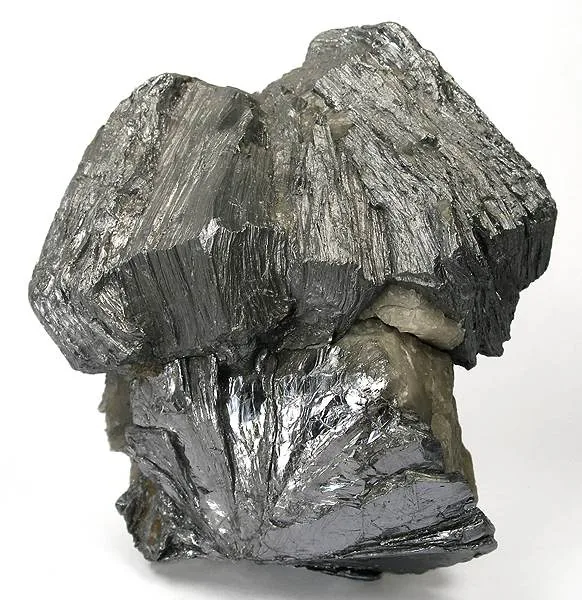
Rhenium is one of the rarest elements in the Earth's continental crust, present at only about one part per billion. It is a dense, silvery, refractory metal with the third-highest melting point of any element, after carbon and tungsten, and exceptional strength at extreme temperature.
Read more: the deposit model, why it matters and where it is used +
More on rhenium
It almost never forms a mineral of its own; the rhenium sulphide rheniite is a mineralogical curiosity confined to a handful of volcanic fumaroles. Instead, rhenium hides inside molybdenite, the molybdenum sulphide of porphyry systems, substituting for molybdenum in its lattice because the two elements share such similar chemistry. MineDSS therefore models rhenium where it actually concentrates: within porphyry copper–molybdenum systems, whose altered and veined intrusions, distinctive geophysical response and multi-element geochemical halo leave a mappable footprint a prospectivity model is built to read across large, partly covered terrains.
The deposit model
Rhenium is won as a by-product of a by-product. Porphyry copper–molybdenum systems form above felsic to intermediate intrusions emplaced at shallow crustal levels, where fluids exsolving from cooling magma deposit copper and molybdenum sulphides in dense quartz stockwork veins within and around the causative pluton. The molybdenite of these systems carries rhenium in its crystal structure (commonly hundreds to a few thousand parts per million, far more than the molybdenite of Climax-type molybdenum deposits), so the richest rhenium ground is porphyry copper mineralisation with rhenium-bearing molybdenite. These systems are marked by potassic and phyllic alteration, silicification and zoned sulphide assemblages.
Why it matters
Rhenium is a strategic, critical mineral out of all proportion to the tonnages involved. Its stability at extreme temperature makes it indispensable to the single-crystal nickel-based superalloys used in jet-engine and gas-turbine blades, placing it at the heart of both civil aviation and defence aerospace. Supply is unusually concentrated and almost wholly a by-product: because no economic deposit is mined for rhenium alone, primary output rides on copper and molybdenum markets rather than on rhenium demand itself. That coupling, combined with a short list of producing countries and heavy reliance on recycled superalloy scrap and spent catalysts, gives transparent, defensible targeting of rhenium-bearing porphyry ground real value to both explorers and the governments securing critical-materials supply chains.
Where it's used
More than eighty per cent of the rhenium consumed worldwide goes into high-temperature superalloys, above all the nickel-based alloys cast into turbine blades and vanes for aircraft engines, industrial gas turbines and rocket propulsion, where even a few per cent of rhenium sharply raises creep resistance and high-temperature strength. Its other principal use is in platinum–rhenium catalysts for petroleum refining, where catalytic reforming lifts the octane of unleaded petrol and improves refinery yields. Smaller quantities serve thermocouples, filaments, electrical contacts, X-ray sources and speciality coatings that exploit rhenium's very high melting point and resistance to wear and corrosion.
Questions
Rhenium: common questions.
Which deposit types does MineDSS model for rhenium? +
One system: porphyry copper–molybdenum. Rhenium almost never forms a mineral of its own (the rhenium sulphide rheniite is a rare fumarolic curiosity), so nearly all mined rhenium is recovered from rhenium-bearing molybdenite in porphyry copper–molybdenum deposits, extracted downstream from the flue dust of molybdenite roasting. The model therefore ranks ground for rhenium enrichment within these porphyry systems rather than attempting unrelated styles, scoring the altered, veined intrusive settings whose molybdenite carries the highest rhenium.
How is the model tested, and where can I run rhenium? +
Every MineDSS model is tested before it is served: we withhold whole blocks of ground, rebuild the model without them, and check that it still ranks the anomalous samples there above background, with test ground kept spatially separate. A model that does not pass our release gates is not used, for any mineral, in any country. National models for rhenium run in Australia and the United States, with ranked targets. Rhenium is not modelled outside those countries. Skill is model-level, never a specific site's measured accuracy, and never a discovery or JORC / NI 43-101 resource claim.
Which pathfinder elements track rhenium? +
The classic pathfinders are molybdenum, copper, selenium, tungsten, bismuth and tellurium, with molybdenum, copper and selenium leading. Molybdenum matters most because rhenium substitutes directly into molybdenite; copper reflects the porphyry copper host; and selenium, tellurium, tungsten and bismuth track the sulphide, telluride and intrusion-related chemistry that accompanies the ore. These elements are part of the geochemical record our models learn from. In a run on any piece of ground, the map itself is read from geology and rock age, gravity and magnetics, radiometrics, terrain, satellite radar and spectral alteration, so it covers ground that has never been sampled.
Does a high MineDSS score mean a rhenium deposit or a resource estimate? +
No. A high score means its evidence closely matches ground where samples assay anomalously high for the target mineral, and it merits closer exploration attention. It is not a discovery, not a JORC or NI 43-101 resource or reserve estimate, and not drilling or investment advice. MineDSS ranks prospectivity to help prioritise where to look; confirming whether rhenium is present, and at what grade (typically as a by-product credit within copper–molybdenum ore), still requires field programmes, drilling and independent assessment by qualified professionals.
-
Partners
Exploration and mining companies interested in working with us.
-
Investors
The record, the models and the ground they point to.
-
Publishers and researchers
Geological surveys, universities and programmes whose work the record is built on.
MineDSS ranks prospectivity to help you decide where to explore next. It is not a discovery, not a JORC or NI 43-101 resource or reserve estimate, and not drilling or investment advice.