SEDEX / VMS
Lead, zinc & silver prospectivityacross Australia, the USA, Canada & worldwide for zinc.
SEDEX and VMS lead-zinc-silver, ranked and explained across Australia, the United States and Canada. Elsewhere, our global model maps zinc.
-
 ✓
✓ Australia
Ranked targets
-
 ✓
✓ United States
Ranked targets
-
 ✓
✓ Canada
Ranked targets
- ✓
Everywhere else
Global model · zinc
Ranked targets come with national models in Australia, the United States and Canada. Everywhere else, the global model returns the prospectivity map, the geology behind it and a confidence read. Next, the models are retrained on the full record and new sources, such as hyperspectral imagery, before we use them to rank and select ground.
How we rank lead, zinc & silver ground
From a country to a decision.
- 01 · Atlas
Know the ground
The geology, structure, recorded deposits, tenure and geochemistry over the ground, on one map with the source of every layer.
See Atlas - 02 · Open Ground
Find ground you can peg
Which ground is open, held or excluded, read from each licensing authority's own register.
See Open Ground - 03 · Prospectivity
Rank it for lead, zinc & silver
The ground scored for lead, zinc & silver, with the evidence behind it and ranked targets in Australia, the United States and Canada. Anywhere else, the global model maps zinc.
See Prospectivity - 04 · Spectral
Map the alteration
The alteration minerals and the structures that control them, from satellite: regional to district scale, and camp scale from WorldView-3.
See Spectral - 05 · Due Diligence
Check before committing
Tenure, land access, environment and the real cost to hold and test a lead, zinc & silver position.
See Due Diligence -
Talk to us about lead, zinc & silver
Partners, investors, publishers and researchers.
Live examples
See lead, zinc & silver on real ground.
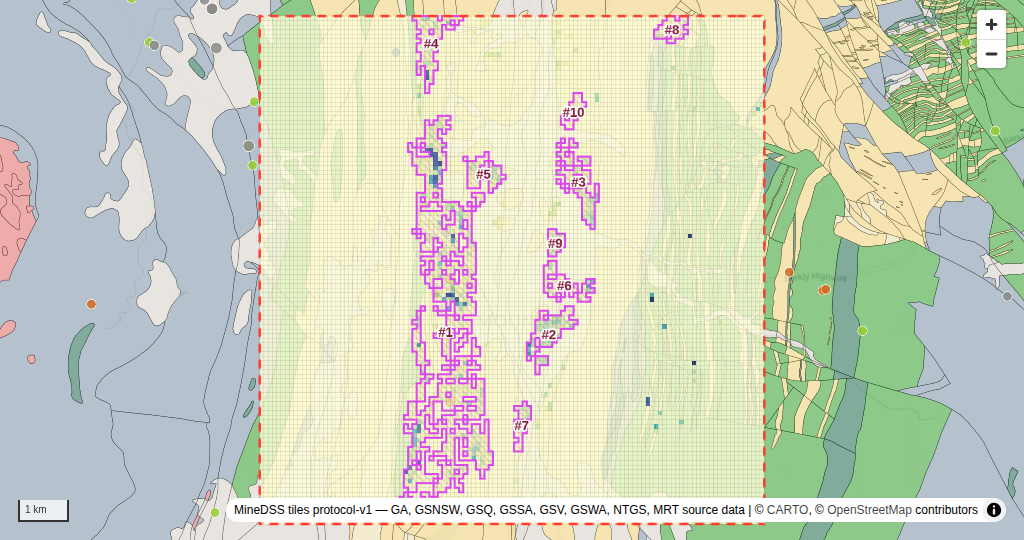
Example runs with the prospectivity map, the reasoning behind each target and the geology beneath it. No login needed.
The deposit system
The lead, zinc & silver system.
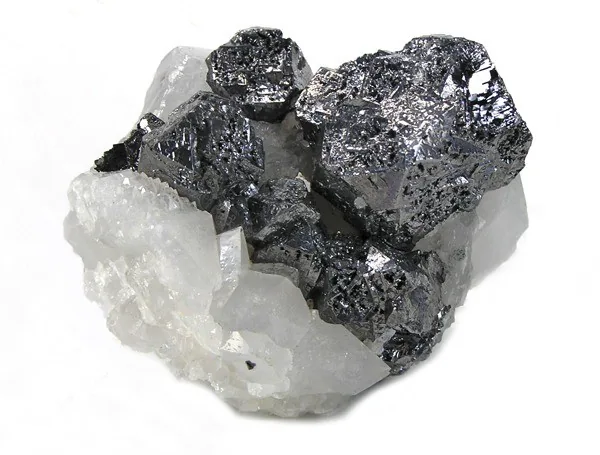
Lead, zinc and silver are the classic base-metal trio, most often mined together from the same sulphide bodies. MineDSS focuses on the two systems that supply the bulk of the world's zinc and a major share of its lead and silver: sediment-hosted (SEDEX) deposits, formed where metal-bearing brines vent into a sedimentary basin and precipitate stratabound lead-zinc-silver sulphides, and volcanogenic massive sulphide (VMS) systems, deposited on and beneath the seafloor from hydrothermal fluids circulating through submarine volcanic piles.
Read more: the deposit model, why it matters and where it is used +
More on lead, zinc & silver
Both are large, chemically distinctive sulphide accumulations, and the silver they carry is by-product silver bound in that base-metal ore, distinct from the epithermal silver MineDSS models separately.
The deposit model
SEDEX systems are stratabound, hosted in fine-grained clastic and carbonaceous basin sediments, and controlled by growth faults and sub-basins that channel hot, metalliferous brines onto the seafloor, where sphalerite, galena and iron sulphides precipitate as bedded ore, commonly with a barite or exhalative signature. VMS bodies sit within submarine volcanic and volcano-sedimentary sequences as lens-shaped massive sulphides above a discordant feeder stockwork, with chlorite-sericite alteration marking the fluid pathway. Both are strongly stratigraphically and structurally controlled.
Why it matters
Zinc, lead and silver sit at the centre of industrial and energy-transition demand. Zinc is the primary defence against steel corrosion through galvanising, making it fundamental to construction, infrastructure and vehicles. Lead remains essential to stationary and backup energy storage, and silver is central to electrification, grid buildout and solar manufacturing. Because base-metal supply is concentrated in a relatively small number of large sulphide deposits, and grades decline as mature mines deplete, the search for new SEDEX and VMS ground stays commercially significant across the cycle.
Where it's used
Zinc protects steel through galvanising and alloys into brass and die-cast components. Lead dominates lead-acid batteries for vehicles, standby and backup power (UPS, telecoms), and is used in radiation shielding and specialist alloys. Silver combines the highest electrical and thermal conductivity of any metal with strong optical reflectivity, making it essential to solar photovoltaics, electronics, contacts and brazing alloys, alongside its longstanding roles in jewellery, coinage and investment.
Questions
Lead, zinc & silver: common questions.
Which lead-zinc-silver deposit types does MineDSS model? +
Two: sediment-hosted (SEDEX) systems, where metal-rich basin brines precipitate stratabound lead-zinc-silver sulphides, and volcanogenic massive sulphide (VMS) systems, formed from hydrothermal fluids in submarine volcanic sequences. Together these supply most of the world's mined zinc and a major share of its lead and silver. The by-product silver in this base-metal route is distinct from the epithermal silver MineDSS models separately. Mount Isa in Queensland is a well-known example of this style of endowment.
How is the model tested, and where can I run lead, zinc & silver? +
Every MineDSS model is tested before it is served: we withhold whole blocks of ground, rebuild the model without them, and check that it still ranks the anomalous samples there above background, with test ground kept spatially separate. A model that does not pass our release gates is not used, for any mineral, in any country. National models for lead, zinc & silver run in Australia, the United States and Canada, with ranked targets. Anywhere else in the world, the global model maps zinc on its own and returns the prospectivity map, the geology behind it and a confidence read. Skill is model-level, never a specific site's measured accuracy, and never a discovery or JORC / NI 43-101 resource claim.
Why model lead, zinc and silver together? +
Because they occur together. In SEDEX and VMS deposits the same sulphide bodies carry sphalerite, galena and by-product silver, so they share host rocks, structural controls, alteration and a common geochemical footprint. Modelling them as one base-metal system reflects how the ore actually forms and is mined, rather than treating co-located metals as unrelated targets.
Does a high ranking mean there is a deposit or a resource in the ground? +
No. MineDSS ranks ground by how closely its geology, geophysics and satellite alteration match ground where samples assay anomalously high for the target metals. A high rank flags prospectivity for follow-up work, not a confirmed discovery, and it is never a JORC or NI 43-101 resource or reserve estimate, nor investment or drilling advice. Ranked ground still requires field validation and drilling to test.
-
Partners
Exploration and mining companies interested in working with us.
-
Investors
The record, the models and the ground they point to.
-
Publishers and researchers
Geological surveys, universities and programmes whose work the record is built on.
MineDSS ranks prospectivity to help you decide where to explore next. It is not a discovery, not a JORC or NI 43-101 resource or reserve estimate, and not drilling or investment advice.