reef / contact-type
Platinum prospectivityacross Australia, the USA, Canada & worldwide.
Reef-type and contact-type platinum-group mineralisation in layered intrusions, ranked and explained across Australia, the United States and Canada.
-
 ✓
✓ Australia
Ranked targets
-
 ✓
✓ United States
Ranked targets
-
 ✓
✓ Canada
Ranked targets
- ✓
Everywhere else
Global model
Ranked targets come with national models in Australia, the United States and Canada. Everywhere else, the global model returns the prospectivity map, the geology behind it and a confidence read. Next, the models are retrained on the full record and new sources, such as hyperspectral imagery, before we use them to rank and select ground.
How we rank platinum ground
From a country to a decision.
- 01 · Atlas
Know the ground
The geology, structure, recorded deposits, tenure and geochemistry over the ground, on one map with the source of every layer.
See Atlas - 02 · Open Ground
Find ground you can peg
Which ground is open, held or excluded, read from each licensing authority's own register.
See Open Ground - 03 · Prospectivity
Rank it for platinum
The ground scored for platinum, with the evidence behind it and ranked targets in Australia, the United States and Canada. Anywhere else, the global model maps platinum.
See Prospectivity - 04 · Spectral
Map the alteration
The alteration minerals and the structures that control them, from satellite: regional to district scale, and camp scale from WorldView-3.
See Spectral - 05 · Due Diligence
Check before committing
Tenure, land access, environment and the real cost to hold and test a platinum position.
See Due Diligence -
Talk to us about platinum
Partners, investors, publishers and researchers.
The deposit system
The platinum system.
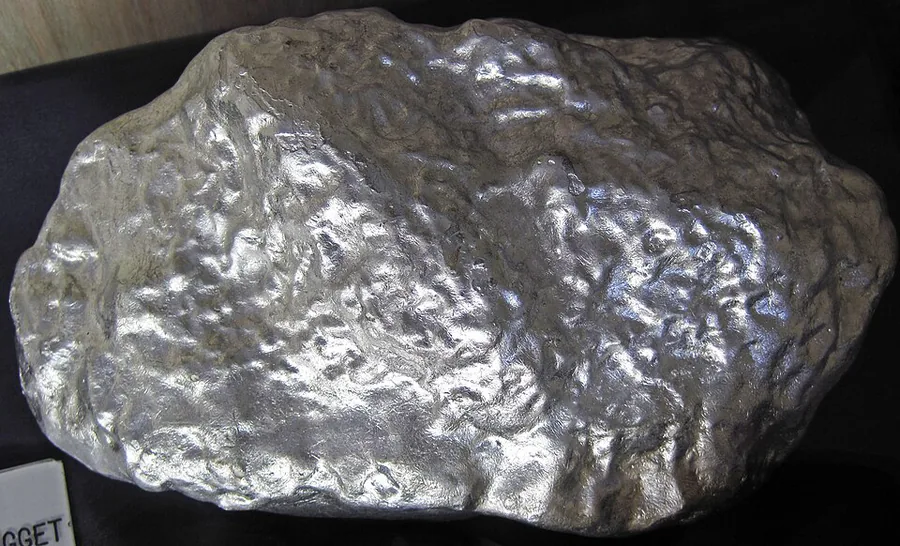
Platinum is a dense, chemically inert precious metal, the best known of the six platinum-group elements. In nature it occurs as native platinum and platinum-iron alloys, and in platinum-group minerals such as sperrylite, a platinum arsenide, and cooperite, a platinum sulphide.
Read more: the deposit model, why it matters and where it is used +
More on platinum
Economic concentrations form almost entirely by magmatic processes: platinum is scavenged from large volumes of cooling mafic magma into immiscible sulphide droplets and chromite, then concentrated within layered mafic–ultramafic intrusions. MineDSS models platinum through two families in these intrusions: reef-type and contact-type systems. Each leaves a mappable footprint of layered mafic and ultramafic rocks, chromitite and sulphide horizons, characteristic gravity and magnetic responses, and a co-located multi-element geochemical signature, which is exactly the pattern a prospectivity model is built to read across large, partly covered terrains.
The deposit model
Both systems are magmatic, governed by sulphur saturation and chromite crystallisation rather than hydrothermal fluids. Reef-type deposits are thin, laterally continuous stratiform horizons in which platinum-group elements concentrate at a specific level of the intrusion as settling sulphide droplets and chromite scavenge metals from a tall column of magma; the Merensky Reef, the UG2 chromitite and the Stillwater J-M Reef are the classic archetypes. Contact-type deposits are broader zones of disseminated copper–nickel–platinum-group sulphide near the base or margin of an intrusion, formed where ascending magma assimilated crustal sulphur and reached sulphide saturation.
Why it matters
Platinum is a strategic precious metal and appears on the critical-minerals lists of the United States, the European Union, Canada and the United Kingdom. It underpins the autocatalysts that control vehicle emissions, and it is increasingly central to the hydrogen economy, where it catalyses both the electrolysers that produce green hydrogen and the fuel cells that convert it back to electricity. Primary supply is heavily concentrated (the great majority is mined from a handful of southern African and Russian operations), and the market has run in structural deficit. That combination of essential demand and concentrated supply makes transparent, defensible targeting of prospective ground in North America a matter of genuine strategic and commercial weight for explorers and the governments that permit them.
Where it's used
The largest single use of platinum is in autocatalysts, where it converts harmful exhaust gases into less harmful ones, with a broad range of industrial applications and jewellery its other principal markets. It is a workhorse industrial catalyst (in petroleum refining and in nitric acid and silicone production) and a key material in the hydrogen value chain, catalysing proton-exchange-membrane fuel cells and electrolysers. Platinum also serves electronics and hard-disk coatings, high-quality glass manufacture, thermocouples and laboratory ware, and it has important medical roles, from platinum-based chemotherapy drugs to durable implants. Its density and inertness also support its long-standing role as an investment metal held in bars and coins.
Questions
Platinum: common questions.
Which platinum deposit types does MineDSS model? +
MineDSS models two families within layered mafic–ultramafic intrusions: reef-type and contact-type platinum-group-element systems. Reef-type deposits are thin, laterally continuous stratiform horizons (the Merensky Reef, the UG2 chromitite and the Stillwater J-M Reef are the classic examples), where platinum concentrates as settling sulphide droplets and chromite scavenge metals from a large magma column. Contact-type deposits are broader zones of disseminated copper–nickel–platinum-group sulphide near the base or margin of an intrusion, formed where magma assimilated crustal sulphur. Both are magmatic in origin. The model does not attempt to represent placer platinum or unrelated deposit styles; it ranks ground by how closely its evidence matches ground where samples assay anomalously high for the target mineral.
How is the model tested, and where can I run platinum? +
Every MineDSS model is tested before it is served: we withhold whole blocks of ground, rebuild the model without them, and check that it still ranks the anomalous samples there above background, with test ground kept spatially separate. A model that does not pass our release gates is not used, for any mineral, in any country. National models for platinum run in Australia, the United States and Canada, with ranked targets. Anywhere else in the world, the global model returns the prospectivity map, the geology behind it and a confidence read. Skill is model-level, never a specific site's measured accuracy, and never a discovery or JORC / NI 43-101 resource claim.
Which pathfinder elements track platinum? +
The classic pathfinders are nickel, copper, chromium, cobalt, vanadium and iridium, with nickel, copper and chromium leading. Nickel and copper mark the magmatic sulphide that scavenges platinum-group elements; chromium tracks the chromitite layers that host reef mineralisation; cobalt accompanies nickel-bearing sulphide; vanadium concentrates in the oxide layers of the same intrusions; and iridium is a companion platinum-group element. These elements are part of the geochemical record our models learn from. In a run on any piece of ground, the map itself is read from geology and rock age, gravity and magnetics, radiometrics, terrain, satellite radar and spectral alteration, so it covers ground that has never been sampled.
Does a high MineDSS score mean a deposit or a resource estimate? +
No. A high score means its evidence closely matches ground where samples assay anomalously high for the target mineral, and it merits closer exploration attention. The model is trained to recognise anomalous platinum geochemistry (samples assaying at or above 10 ppb platinum), not to certify a deposit. A high ranking is not a discovery, not a JORC or NI 43-101 resource or reserve estimate, and not drilling or investment advice. MineDSS ranks prospectivity to help prioritise where to look; confirming whether platinum is present, and in what quantity and grade, still requires field programmes, drilling and independent assessment by qualified professionals.
-
Partners
Exploration and mining companies interested in working with us.
-
Investors
The record, the models and the ground they point to.
-
Publishers and researchers
Geological surveys, universities and programmes whose work the record is built on.
MineDSS ranks prospectivity to help you decide where to explore next. It is not a discovery, not a JORC or NI 43-101 resource or reserve estimate, and not drilling or investment advice.