rare-metal pegmatite / granite
Rubidium prospectivityacross Australia, the USA, Canada & worldwide.
Rubidium in rare-metal pegmatites and highly-evolved granites, ranked and explained across Australia, the United States and Canada.
-
 ✓
✓ Australia
Ranked targets
-
 ✓
✓ United States
Ranked targets
-
 ✓
✓ Canada
Ranked targets
- ✓
Everywhere else
Global model
Ranked targets come with national models in Australia, the United States and Canada. Everywhere else, the global model returns the prospectivity map, the geology behind it and a confidence read. Next, the models are retrained on the full record and new sources, such as hyperspectral imagery, before we use them to rank and select ground.
How we rank rubidium ground
From a country to a decision.
- 01 · Atlas
Know the ground
The geology, structure, recorded deposits, tenure and geochemistry over the ground, on one map with the source of every layer.
See Atlas - 02 · Open Ground
Find ground you can peg
Which ground is open, held or excluded, read from each licensing authority's own register.
See Open Ground - 03 · Prospectivity
Rank it for rubidium
The ground scored for rubidium, with the evidence behind it and ranked targets in Australia, the United States and Canada. Anywhere else, the global model maps rubidium.
See Prospectivity - 04 · Spectral
Map the alteration
The alteration minerals and the structures that control them, from satellite: regional to district scale, and camp scale from WorldView-3.
See Spectral - 05 · Due Diligence
Check before committing
Tenure, land access, environment and the real cost to hold and test a rubidium position.
See Due Diligence -
Talk to us about rubidium
Partners, investors, publishers and researchers.
The deposit system
The rubidium system.
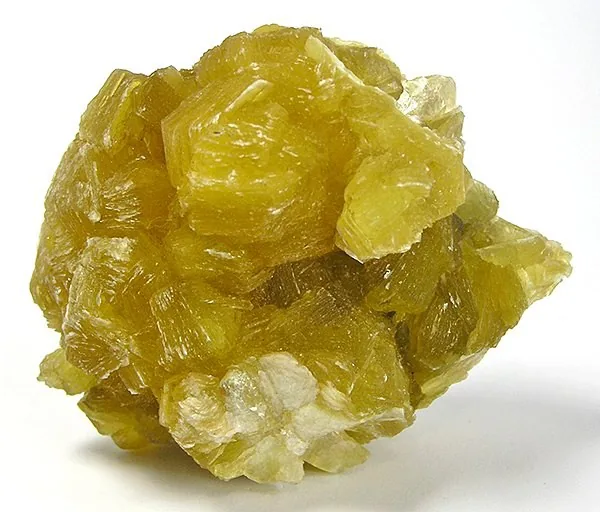
Rubidium is a soft, silvery-white alkali metal, closely related to potassium and among the most reactive of all elements. It forms no ore mineral of its own; instead it substitutes for potassium in the lattice of potassium-bearing micas and alkali feldspars, so economic concentrations arise only where those host minerals themselves become rubidium-rich.
Read more: the deposit model, why it matters and where it is used +
More on rubidium
That happens in the most highly-evolved products of granitic magmatism. MineDSS ranks ground for rubidium enrichment in two such settings: rare-metal pegmatites of the lithium-caesium-tantalum family and highly-fractionated rare-metal granites. In both, extreme magmatic fractionation drives rubidium into lepidolite, zinnwaldite, muscovite and potassium feldspar alongside a distinctive suite of other rare metals. That evolved granite-pegmatite footprint (mapped geology, greisen alteration and a multi-element geochemical halo) is exactly the pattern a prospectivity model is built to read across large, partly covered terrains.
The deposit model
Both systems are governed by extreme magmatic fractionation rather than by an external fluid source. As a granitic melt crystallises, incompatible large-ion elements (rubidium, caesium and lithium) together with other rare metals are progressively excluded from the early-forming minerals and concentrated in the residual melt. Rare-metal pegmatites are the most evolved end members: coarse, internally zoned bodies with border, wall, intermediate and core zones, in which lithium, caesium and tantalum concentrate and rubidium rides in lepidolite and potassium feldspar. Highly-fractionated rare-metal granites carry the same signature at intrusion scale: peraluminous leucogranites enriched in rubidium, niobium, tantalum, tin and fluorine, often capped by greisen alteration of quartz, mica and topaz with cassiterite. A falling potassium-to-rubidium ratio is the classic index of this evolution.
Why it matters
Rubidium appears on the critical minerals list of the United States, reflecting how a small, concentrated supply underpins outsized industrial and defence applications. There is no primary rubidium mine anywhere in the world; the metal is recovered only as a by-product of lithium and caesium processing, and reported production is both minimal and geographically concentrated in a narrow set of suppliers. That combination (negligible domestic output, reliance on overseas processing, and rising demand from precision timing, quantum technology and medical imaging) makes transparent, defensible identification of prospective ground strategically valuable to explorers and to the governments that classify and permit critical-mineral supply.
Where it's used
Rubidium's largest technical roles are in precision timing and specialty glass. Rubidium atomic clocks are compact, affordable frequency standards that synchronise telecommunications networks, GPS receivers and 5G base stations, where accurate timing keeps decentralised systems in step. Rubidium carbonate is added to specialty and fibre-optic glass to lower electrical conductivity and improve durability and refractive control. In medicine, the rubidium-82 isotope is a cardiac PET imaging agent used to assess blood flow to the heart muscle. Further uses span photoelectric cells, pyrotechnics, and research in cold-atom physics and quantum computing, where rubidium vapour is a workhorse of laser-cooling experiments. These are low-volume but high-value applications, which is why secure, well-characterised supply carries weight beyond its tonnage.
Questions
Rubidium: common questions.
Which rubidium deposit types does MineDSS model? +
MineDSS models rubidium enrichment in two settings: rare-metal pegmatites of the lithium-caesium-tantalum family and highly-fractionated rare-metal granites. Rubidium forms no ore mineral of its own, so it is concentrated only where extreme magmatic fractionation drives it into lepidolite, zinnwaldite, muscovite and potassium feldspar. These are the same evolved systems that host lithium, caesium and tantalum. Rare-metal pegmatites are coarse, internally zoned bodies, while rare-metal granites are peraluminous leucogranites often marked by greisen alteration and cassiterite. The model does not attempt unrelated deposit styles; it ranks ground by how closely its evidence matches ground where samples assay anomalously high for the target mineral.
How is the model tested, and where can I run rubidium? +
Every MineDSS model is tested before it is served: we withhold whole blocks of ground, rebuild the model without them, and check that it still ranks the anomalous samples there above background, with test ground kept spatially separate. A model that does not pass our release gates is not used, for any mineral, in any country. National models for rubidium run in Australia, the United States and Canada, with ranked targets. Anywhere else in the world, the global model returns the prospectivity map, the geology behind it and a confidence read. Skill is model-level, never a specific site's measured accuracy, and never a discovery or JORC / NI 43-101 resource claim.
Which pathfinder elements track rubidium? +
The classic pathfinders are lithium, beryllium, tin, tantalum, niobium and thallium, with lithium, beryllium and tin leading. Because rubidium has no mineral of its own, these elements are the practical fingerprint of the highly-fractionated pegmatites and granites that concentrate it; thallium in particular substitutes for rubidium and potassium in the same crystal sites. These elements are part of the geochemical record our models learn from. In a run on any piece of ground, the map itself is read from geology and rock age, gravity and magnetics, radiometrics, terrain, satellite radar and spectral alteration, so it covers ground that has never been sampled.
Does a high MineDSS score mean a deposit or a resource estimate? +
No. A high score means its evidence closely matches ground where samples assay anomalously high for rubidium, and it merits closer exploration attention; the model is trained to recognise rubidium assays at or above about 200 ppm. It is not a discovery, not a JORC or NI 43-101 resource estimate, and not drilling or investment advice. MineDSS ranks prospectivity to help prioritise where to look; confirming whether economic rubidium is present, and in what quantity and grade, still requires field programmes, drilling and independent assessment by qualified professionals.
-
Partners
Exploration and mining companies interested in working with us.
-
Investors
The record, the models and the ground they point to.
-
Publishers and researchers
Geological surveys, universities and programmes whose work the record is built on.
MineDSS ranks prospectivity to help you decide where to explore next. It is not a discovery, not a JORC or NI 43-101 resource or reserve estimate, and not drilling or investment advice.