aluminous / zinc-sulphide
Gallium prospectivityacross Australia, the USA, Canada & worldwide.
Gallium enrichment in aluminous and zinc-sulphide host systems, ranked and explained across Australia, the United States and Canada.
-
 ✓
✓ Australia
Ranked targets
-
 ✓
✓ United States
Ranked targets
-
 ✓
✓ Canada
Ranked targets
- ✓
Everywhere else
Global model
Ranked targets come with national models in Australia, the United States and Canada. Everywhere else, the global model returns the prospectivity map, the geology behind it and a confidence read. Next, the models are retrained on the full record and new sources, such as hyperspectral imagery, before we use them to rank and select ground.
How we rank gallium ground
From a country to a decision.
- 01 · Atlas
Know the ground
The geology, structure, recorded deposits, tenure and geochemistry over the ground, on one map with the source of every layer.
See Atlas - 02 · Open Ground
Find ground you can peg
Which ground is open, held or excluded, read from each licensing authority's own register.
See Open Ground - 03 · Prospectivity
Rank it for gallium
The ground scored for gallium, with the evidence behind it and ranked targets in Australia, the United States and Canada. Anywhere else, the global model maps gallium.
See Prospectivity - 04 · Spectral
Map the alteration
The alteration minerals and the structures that control them, from satellite: regional to district scale, and camp scale from WorldView-3.
See Spectral - 05 · Due Diligence
Check before committing
Tenure, land access, environment and the real cost to hold and test a gallium position.
See Due Diligence -
Talk to us about gallium
Partners, investors, publishers and researchers.
The deposit system
The gallium system.
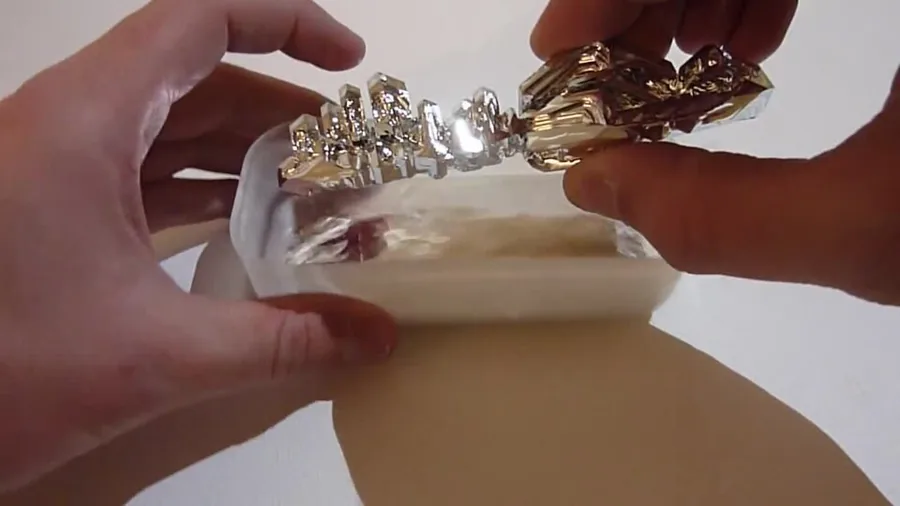
Gallium is a soft, silvery post-transition metal so low-melting that it turns to liquid just above room temperature, yet it is prized for the compound semiconductors it forms rather than for the metal itself. It builds no ore of its own: at around seventeen parts per million in the crust it never concentrates into a standalone deposit.
Read more: the deposit model, why it matters and where it is used +
More on gallium
Instead it behaves as a geochemical hitch-hiker, substituting for aluminium and zinc, whose ions sit close to gallium in size and charge. MineDSS models gallium through the two host families that carry it. Aluminous host systems (bauxite and highly-evolved, aluminium-rich granitic and pegmatitic rocks) concentrate gallium alongside aluminium, while zinc-sulphide host systems fix it inside sphalerite. Each leaves a mappable geological, geophysical and geochemical footprint that a prospectivity model is built to read across large, partly covered terrains.
The deposit model
Neither host family produces gallium for its own sake; both concentrate it as a passenger. In aluminous systems, intense lateritic and karst weathering of aluminium-rich parent rock residually enriches the hydroxide minerals gibbsite, boehmite and diaspore that make up bauxite, each carrying on the order of 50 ppm gallium. A second aluminous route is magmatic: strongly fractionated, alkaline to peralkaline granites and rare-element pegmatites drive gallium into their aluminous, incompatible-element-rich phases, alongside rubidium, tin, niobium, beryllium and lithium. In zinc-sulphide systems, gallium substitutes for zinc in the sphalerite lattice and is later recovered from zinc concentrates drawn from sediment-hosted, carbonate-hosted and volcanogenic massive-sulphide deposits.
Why it matters
Gallium is a strategic input to advanced electronics and appears on the critical-minerals lists of the United States, Canada, the European Union and other economies. Its importance is sharpened by an unusually concentrated supply chain: the overwhelming majority of primary gallium is produced in China, and recent export controls have underlined how exposed downstream semiconductor, defence and clean-energy industries are to a single source. Because gallium is only ever won as a by-product of aluminium and zinc processing, its availability is tethered to those industries rather than driven by its own price, and only a small fraction of the gallium latent in bauxite and zinc ore is actually recovered. Transparent, defensible targeting of gallium-bearing ground therefore carries real weight for both explorers and the governments that permit them.
Where it's used
Gallium's value is concentrated in compound semiconductors. Gallium arsenide and gallium nitride underpin the integrated circuits, radio-frequency and microwave devices behind mobile networks, radar, satellite communications and electronic warfare, where they outperform silicon at high frequency and temperature. Gallium nitride also drives efficient power electronics and, together with gallium's role in light-emitting and laser diodes, much of modern solid-state lighting and optical storage. In energy, gallium goes into copper-indium-gallium-selenide thin-film panels and the multi-junction cells that power satellites. Further uses include gadolinium-gallium-garnet substrates for magnetic and optical components, and low-melting alloys that replace toxic mercury. Together these applications make secure, well-characterised supply a matter of both industrial and national interest.
Questions
Gallium: common questions.
Which gallium deposit types does MineDSS model? +
MineDSS models the two host families that actually carry gallium: aluminous host systems and zinc-sulphide host systems. Because gallium forms no ore of its own, the aluminous family covers bauxite (where lateritic and karst weathering concentrates gallium-bearing gibbsite, boehmite and diaspore) together with the highly-evolved, aluminium-rich granites and pegmatites that enrich it magmatically. The zinc-sulphide family covers sphalerite-bearing deposits, in which gallium substitutes for zinc and is recovered from zinc concentrates. The model does not attempt to represent unrelated styles; it ranks ground by how closely its evidence matches ground where samples assay anomalously high for the target mineral.
How is the model tested, and where can I run gallium? +
Every MineDSS model is tested before it is served: we withhold whole blocks of ground, rebuild the model without them, and check that it still ranks the anomalous samples there above background, with test ground kept spatially separate. A model that does not pass our release gates is not used, for any mineral, in any country. National models for gallium run in Australia, the United States and Canada, with ranked targets. Anywhere else in the world, the global model returns the prospectivity map, the geology behind it and a confidence read. Skill is model-level, never a specific site's measured accuracy, and never a discovery or JORC / NI 43-101 resource claim.
Which pathfinder elements track gallium? +
The classic pathfinders are aluminium, rubidium, tin, niobium, beryllium and lithium, with aluminium, rubidium and tin leading. Aluminium is gallium's geochemical twin, marking the aluminous bauxite and igneous hosts into which gallium substitutes, while rubidium, tin, niobium, beryllium and lithium trace the strongly fractionated granites and pegmatites where it concentrates. The gallium-enriched samples the model learns from assay at or above 50 ppm. These elements are part of the geochemical record our models learn from. In a run on any piece of ground, the map itself is read from geology and rock age, gravity and magnetics, radiometrics, terrain, satellite radar and spectral alteration, so it covers ground that has never been sampled.
Does a high MineDSS score mean a deposit or a resource estimate? +
No. A high score means its evidence closely matches ground where samples assay anomalously high for the target mineral, and it merits closer exploration attention. It is not a discovery, not a JORC or NI 43-101 resource estimate, and not drilling or investment advice. It also does not by itself imply an economic operation: gallium is recovered only as a by-product of aluminium and zinc production, so realising it depends on a viable host mine and processing stream. Confirming whether gallium is present, at what tenor, and whether it can be recovered still requires field programmes, sampling and independent assessment by qualified professionals.
-
Partners
Exploration and mining companies interested in working with us.
-
Investors
The record, the models and the ground they point to.
-
Publishers and researchers
Geological surveys, universities and programmes whose work the record is built on.
MineDSS ranks prospectivity to help you decide where to explore next. It is not a discovery, not a JORC or NI 43-101 resource or reserve estimate, and not drilling or investment advice.